What are the Trims and Features of the 2019 Ford Focus?
The 2019 Ford Focus comes in four different trims; the S, SE, SEL, and Titanium. All the trims come with a hatchback version besides the base trim S. In all the trims, the interior offers a modern design with a new dash layout, sportier trim panels, and comfy seats. With the new C2 architecture, the rear legroom has increased by 2.5 inches while the shoulder room has gained by 2.5-inches.
In matters of interior design and technology, the trims have been equipped with a flatter dash while the HVAC vents are smaller and less obtrusive to the design. An infotainment system has replaced the centrally located stack. The conventional gear shifter has been redefined with a rotary unit. Further, the 2019 Ford Focus trims comes with a wireless charging system and the seats redesigned to enhance comfort. Another element that Ford eliminated in the 2019 Ford Focus is the overhangs above the analog gauges.
Under the Hood of the 2019 Ford Focus
 The Ford Focus comes with a variation of two engine sizes. Clients have the option of choosing between the 1.0L Ecoboost or the 1.5L Ecoboost. With the 1.OL engine sized Ford; you can tune it to deliver 84, 99, or 123 horsepower depending on your needs. The 1.5L can attain 148 horsepower or 180 horsepower.
Additionally, the 1.5L sized engine delivers 221 pound-feet of torque regardless of tune. In Europe, the 2.0L diesel engine produces 273 pound-feet of torque. The 2019 Ford Focus adopts a six-speed manual transmission system and an eight-speed automatic transmission system depending on choice.
Safety Features of the Ford Focus
The Ford Focus comes with autonomous emergency braking with pedestrian and cyclist detection. The lane-keeping assist also comes as a standard feature. The higher trims come equipped with the CoPilot 360 package that comprises of additional features like blind spot monitoring, cross-traffic alert, automatic high beams, and a rearview camera. Additionally, the headlights are steering responsive. For speed control, it employs the use of an adaptive cruise control system and evasive steering assist system that aids in the event of imminent danger.

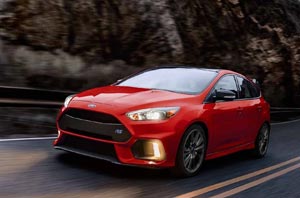 The Ford Focus comes with a variation of two engine sizes. Clients have the option of choosing between the 1.0L Ecoboost or the 1.5L Ecoboost. With the 1.OL engine sized Ford; you can tune it to deliver 84, 99, or 123 horsepower depending on your needs. The 1.5L can attain 148 horsepower or 180 horsepower.
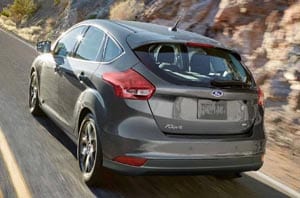 The Ford Focus comes with autonomous emergency braking with pedestrian and cyclist detection. The lane-keeping assist also comes as a standard feature. The higher trims come equipped with the CoPilot 360 package that comprises of additional features like blind spot monitoring, cross-traffic alert, automatic high beams, and a rearview camera. Additionally, the headlights are steering responsive. For speed control, it employs the use of an adaptive cruise control system and evasive steering assist system that aids in the event of imminent danger.